
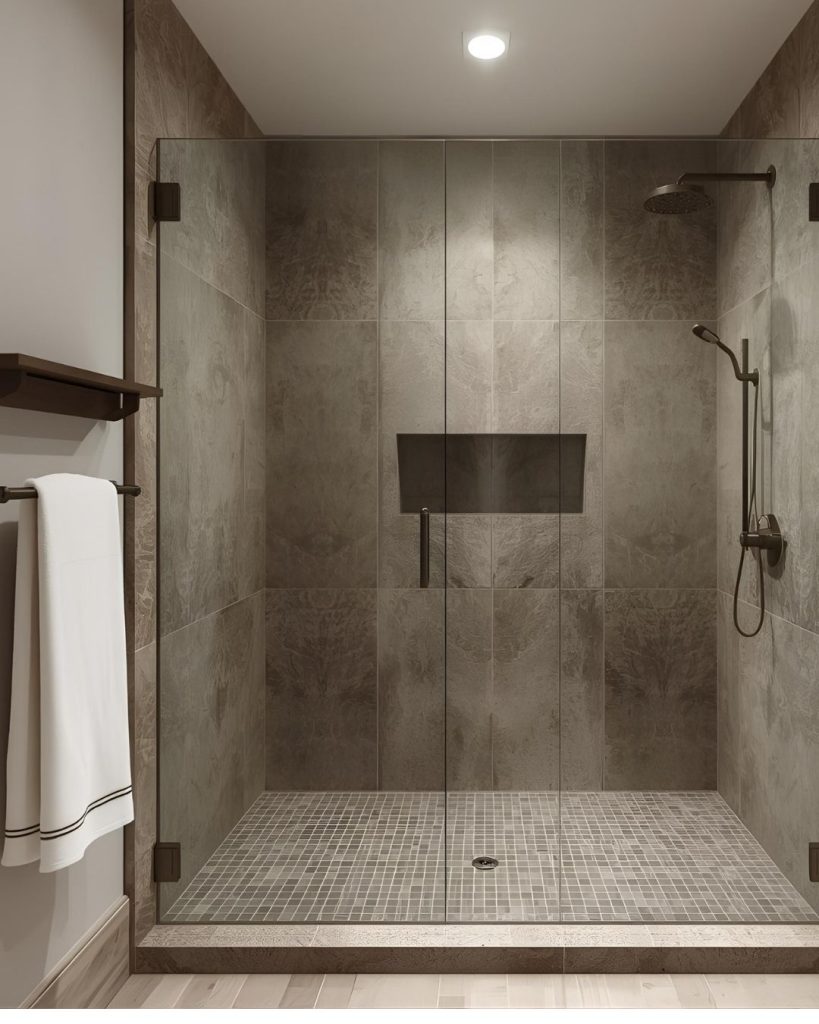
How Much Does a Bathroom Renovation Cost in Poole? | Poole Plumbers
A bathroom renovation is one of the most consistently popular home improvement projects — and one of the most variable in terms of cost. The difference between a straightforward like-for-like refresh and a full strip-out with reconfigured plumbing, new tiling, underfloor heating and a freestanding bath is considerable, and the range of prices in the market reflects that.
Poole has a housing stock that generates steady demand for bathroom work across the full spectrum of that range. The larger detached properties of Canford Cliffs, Branksome Park and Lilliput tend to support higher-specification renovations where budget is less of a constraint. The inter-war and post-war semis of Oakdale, Hamworthy and Parkstone represent the more typical mid-market renovation — a family bathroom that needs modernising without a wholesale reconfiguration of the space. Newer apartments and townhouses around the Poole Quay waterfront and the Holes Bay development areas bring their own considerations around access, building management and wet room suitability.
This post sets out what a bathroom renovation costs in Poole, what the main variables are, and what the process looks like from the initial strip-out through to a finished room.
What Does a Bathroom Renovation Cost in Poole?
Bathroom renovation costs vary more than almost any other home improvement job because the scope can range so dramatically. As a starting framework for the Poole market:
- Basic refresh (new suite, tiling, minimal plumbing changes): £3,500–£6,500
- Mid-range renovation (full strip-out, new suite, full tiling, updated plumbing): £6,500–£12,000
- Higher specification renovation (reconfigured layout, premium suite, wet room or freestanding bath, underfloor heating): £12,000–£22,000+
- Full luxury renovation (bespoke design, high-end finishes, structural alterations): £22,000–£40,000+
These are fully installed prices — labour, materials, sanitaryware, tiling and all associated trades. They assume the bathroom is a standard size (roughly 4 to 6 sqm for a family bathroom). En-suites are typically smaller and sit towards the lower end of each bracket. Larger bathrooms, or those being created from a bedroom conversion, will sit higher.
Poole sits at the upper end of the Dorset and wider South West market for trade labour. The proximity to Bournemouth and the general affluence of the surrounding area means rates are higher here than in more rural parts of the county, though still below London and the South East premium belt. For BH13 to BH17 postcodes and the wider Poole area, the figures above represent realistic installed costs from an established local bathroom fitter.
What Drives the Cost Up or Down?
Scope of Plumbing Work
The single most significant variable in a bathroom renovation cost is how much the plumbing needs to change. A renovation where the WC, basin and bath or shower stay in broadly the same positions — allowing the existing supply and waste pipes to be reused or extended by a short distance — is fundamentally cheaper than one where the layout is reconfigured and all the pipework needs to be re-routed from scratch.
Moving a soil pipe is the most expensive plumbing change in any bathroom. Soil pipes are large diameter, have strict gradient requirements, and often need to penetrate walls or floors in ways that affect the wider structure of the building. On the older properties in central Poole and the pre-war housing across Parkstone, the existing soil pipe arrangements can be complex and not always in the most convenient position for a modern bathroom layout. Understanding what the existing plumbing allows before committing to a layout is an important step that a good plumber will address at the surveying stage.
Waterproofing and Wet Room Construction
A standard bath or shower enclosure relies on the tray and screen to manage water. A wet room — where the floor is graded to a drain and the entire area is open — requires a different and more involved approach to waterproofing. The floor and walls need to be tanked with a proprietary membrane system before any tiles go on, and the floor itself needs to be built up to achieve the correct fall to the drain.
Wet rooms are popular in Poole’s coastal and waterfront properties, and in apartments where a low-profile accessible shower is preferable to a stepped tray. They cost more to construct correctly than a standard shower enclosure, but they create a clean, open aesthetic and are significantly easier to clean and maintain over the long term.
Tiling Specification and Area
Tiling is both a significant labour cost and a significant materials cost in any bathroom renovation. The size of the tiles, the complexity of the layout, and the specification of the tiles themselves all affect the final figure.
Large format tiles — 600mm x 600mm or bigger — are popular in contemporary bathrooms and look impressive when done well, but they require more precise substrate preparation, more careful installation, and generate more waste through cutting. Smaller mosaic tiles take considerably longer to lay per square metre than standard format tiles. Feature walls, niches and mixed formats all add complexity and therefore time.
On the materials side, the range from basic ceramic to large format porcelain to hand-made terracotta or premium natural stone is enormous. A bathroom tiled in standard ceramic from a builders’ merchant costs a fraction of the same room tiled in large format Italian porcelain or hand-finished Moroccan zellige. Both are valid choices — the key is making the decision consciously rather than discovering the cost difference when the quote comes in.
Sanitaryware Specification
The suite itself — bath or shower tray, WC, basin and vanity unit — spans a similarly wide price range. A good quality mid-market suite from an established manufacturer costs £800–£2,000 for the main components. A premium suite with a freestanding bath, wall-hung WC and bespoke vanity unit can run to £5,000–£15,000 or more for the sanitaryware alone before installation costs are considered.
For the larger properties in Branksome Park and Canford Cliffs, where bathroom renovations are often undertaken as part of a broader interior upgrade, the sanitaryware budget frequently represents a significant proportion of the overall project cost. For a more modest semi in Hamworthy or Oakdale, a well-chosen mid-market suite fitted to a high standard will deliver a result that is both attractive and durable without requiring a premium specification.
Underfloor Heating
Electric underfloor heating under tiles is a popular addition in bathroom renovations and adds relatively modest cost for the comfort it delivers. A standard family bathroom with electric UFH under the floor tiles typically adds £400–£900 to the project, including the thermostat and wiring. It needs to be installed before the floor tiles go down, so it is worth deciding on this at the outset rather than as an afterthought once tiling has started.
Water-fed underfloor heating — connected to the central heating system — is more expensive to install and is generally only worth specifying in larger bathrooms or where a complete heating system overhaul is happening at the same time.
Extraction and Ventilation
Building regulations require adequate mechanical ventilation in bathrooms that do not have an openable window, and even in bathrooms that do, a good quality extractor significantly reduces condensation and the associated risk of mould. A basic extractor is an inexpensive addition. A humidity-sensing unit from a quality manufacturer costs a little more but operates automatically and more effectively. In older Poole properties with solid external walls and limited existing ventilation provision, getting the extraction right is worth spending a modest amount to achieve properly.
Access and Structural Considerations
Bathroom renovations in flats — of which Poole has a significant number, particularly in the areas around Poole Quay, Sandbanks Road and the newer waterfront developments — can involve additional considerations around access for materials and waste, noise restrictions during working hours set by the building management, and the need to notify other leaseholders or the freeholder before certain types of work begin. Penetrating a concrete floor slab to re-route waste pipework in a flat requires more planning and cost than the same operation in a house with a timber floor.
For older houses in central Poole and Parkstone with original floorboards, access to the pipework below the bathroom floor is usually straightforward. For properties with concrete intermediate floors — found in some of the mid-century housing stock and most post-1990 construction — it is less so.
What the Process Involves
A bathroom renovation follows a broadly consistent sequence regardless of specification level.
Strip-out comes first — removing the existing suite, tiles, flooring and any stud walls or boxing that is being changed. This generates a significant amount of waste and is the most disruptive part of the process in terms of noise and mess. Most bathroom renovations in Poole can be stripped out in a single day for a standard size room.
First fix plumbing follows — re-routing or extending supply and waste pipes to suit the new layout, and positioning the connections ready for the new suite. If underfloor heating is being installed, the heating element goes down at this stage before any floor build-up begins.
Waterproofing and substrate preparation come next, particularly important in wet room or walk-in shower areas. This stage is often underestimated in importance — the long-term performance of the tiling depends entirely on the quality of what is beneath it.
Tiling is the most visible and in many ways the most skilled part of the renovation. A good tiler working on a standard family bathroom typically takes two to four days depending on tile size, layout complexity and the amount of cutting involved.
Second fix plumbing connects and fits all the sanitaryware — bath, shower, WC, basin, taps and shower fittings. Electrical second fix covers the extractor, lighting, underfloor heating thermostat and any shaver socket or heated towel rail connections.
Finishing trades — sealant, silicone, door rehang if needed, final clean — complete the project.
For a mid-range renovation in a standard Poole family bathroom, the total on-site programme from strip-out to finished room typically runs one to two weeks. Higher specification projects with more complex tiling or structural work take longer.
Is It Worth Getting a Full Design Service?
For straightforward renovations where the layout is staying the same and the choices are relatively limited, a bathroom fitter who can advise on suppliers and help with tile and suite selection is usually sufficient. For higher specification projects — particularly in the larger properties across Canford Cliffs, Branksome Park and the waterfront areas — a bathroom designer who can produce a full 3D design and specification before work starts adds value and reduces the risk of costly changes mid-project.
The cost of a design service varies, but most reputable bathroom designers in the Poole area charge £300–£800 for a full design package, which is modest relative to the overall project cost at the higher end of the market.
Getting a Quote in Poole
If you are planning a bathroom renovation in Poole, Parkstone, Canford Cliffs, Hamworthy, Wimborne, Wareham or anywhere across east Dorset, we are happy to come out and take a look at the existing bathroom, talk through what you want to achieve, and give you a clear quote based on the actual scope of the job. Get in touch to arrange a visit.